
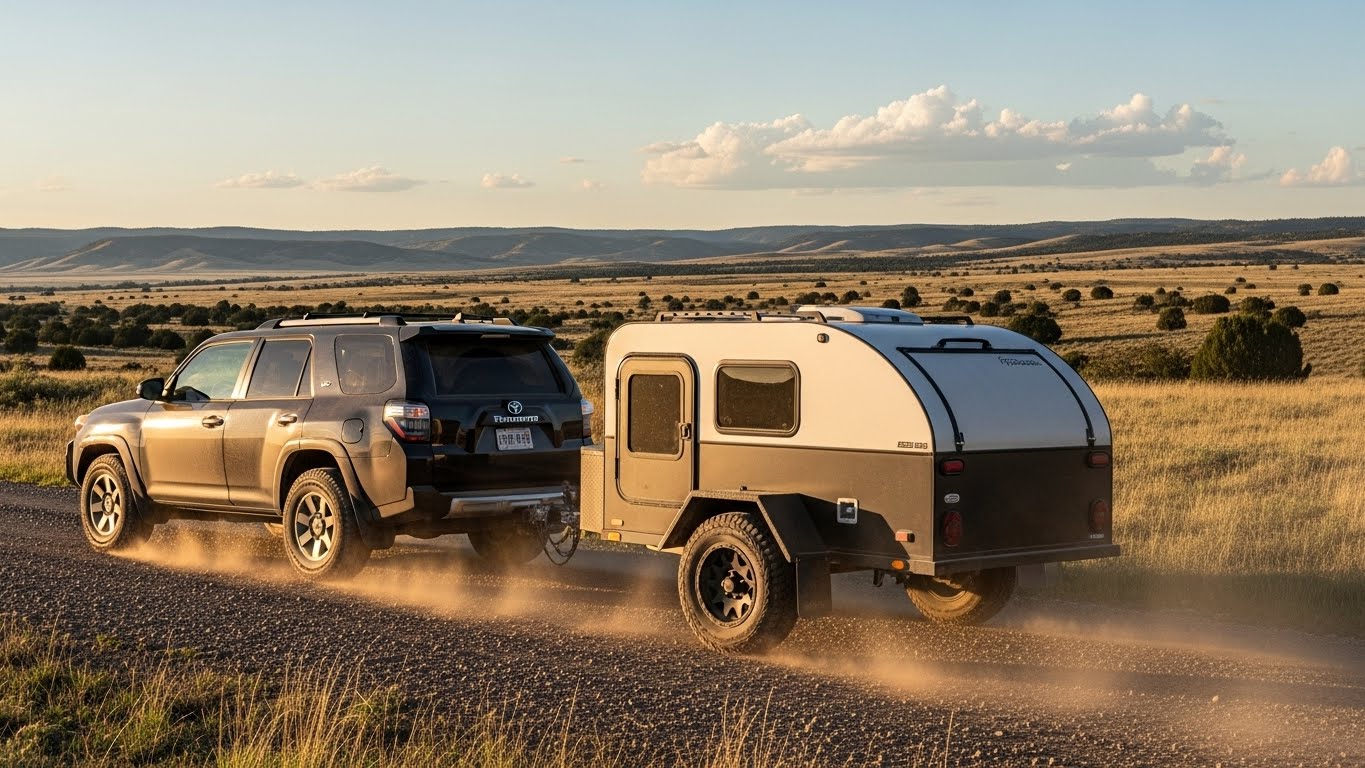
You don’t usually think much about a trailer hitch ball mount for SUV until the day it matters, like when the trailer starts swaying a little too confident on the highway. You’re towing a boat, maybe a utility trailer, maybe something heavier than you told your neighbor, and suddenly the small metal part back there feels very important. Clearance, drop, rise, weight rating, it all stacks up fast and yeah it gets annoying trying to sort what actually works for real SUVs, not just on paper. After filtering through load limits, steel thickness, real-world towing angles, and the kind of stuff people complain about after long drives, one option clearly comes out stronger than the rest: Reese 21536 Trailer Hitch Ball Mount. It handles different towing heights without drama, feels solid even under pressure, and doesn’t make you second-guess every bump in the road, which honestly is the whole point.
Best 5 Trailer Hitch Ball Mounts for SUV
01. Reese 21536 Trailer Hitch Ball Mount

Reese 21536 Trailer Hitch Ball Mount is a straightforward towing starter option built for drivers who want something simple and dependable. It’s commonly paired with 2-inch receivers and works well for light trailers, utility hauls, and basic towing needs where adjustability isn’t a priority. The solid steel build gives it a reassuring feel, especially for short trips and occasional use.
This ball mount is often chosen for its no-frills setup and predictable performance. It doesn’t try to do too much, which is part of its appeal. If your towing setup is consistent and you don’t need frequent height changes, this Reese mount stays out of the way and does its job without fuss.
Pros
- Solid steel construction
- Fits standard 2-inch receivers
- Simple design, easy to use
- Good for light towing and utility trailers
Cons
- No height adjustability
- Not ideal for multiple trailer types
- Limited towing flexibility
02. TYT Adjustable Trailer Hitch Ball Mount
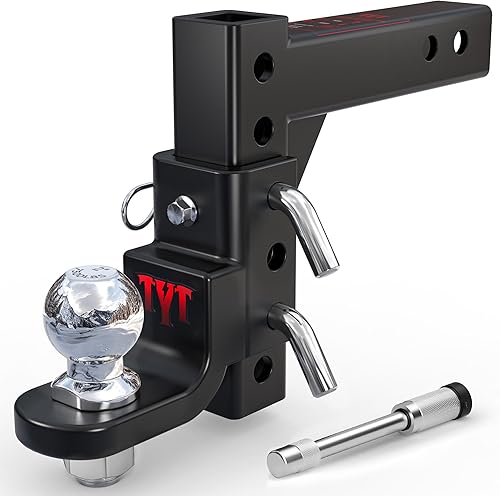
TYT Adjustable Trailer Hitch Ball Mount is built for drivers who tow different trailers and want quick height changes without swapping hardware. The multi-position design allows better leveling for various trailer couplers, helping improve towing stability and reduce rear sag. It’s commonly used with SUVs and pickup trucks that see mixed towing duties.
The adjustable system feels sturdy once locked in place, making it suitable for frequent use. This mount is a good fit for people hauling campers, equipment trailers, or boats where tongue height tends to vary from one setup to another.
Pros
- Multiple height adjustment positions
- Strong steel construction
- Helps keep trailers level
- Suitable for varied towing setups
Cons
- Heavier than fixed ball mounts
- More moving parts to maintain
- Takes longer to set up initially
03. B&W Trailer Hitches Tow & Stow Adjustable Trailer Hitch Ball Mount
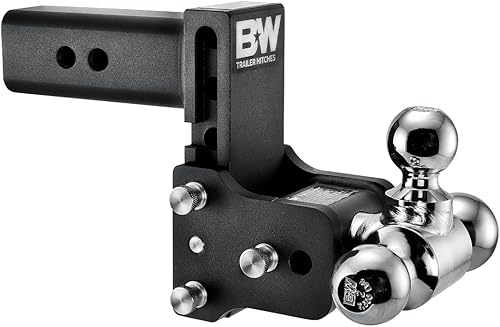
B&W Trailer Hitches Tow & Stow Adjustable Trailer Hitch Ball Mount is designed for serious towing and long-term durability. The adjustable arms slide smoothly, and the stow-away design keeps the hitch tucked when not in use, which helps avoid shin-level surprises. It’s often seen on trucks used for work trailers, campers, and equipment hauling.
This model stands out for build quality and fitment precision. It’s clearly made for frequent towing and higher loads, making it a popular choice for drivers who don’t want to compromise on strength or finish.
Pros
- Heavy-duty build for frequent towing
- Adjustable height for multiple trailers
- Stows neatly when not towing
- Clean fit and solid locking system
Cons
- Higher price compared to basic mounts
- Added weight on the receiver
- Overkill for light towing needs
04. CURT 45900 Adjustable Trailer Hitch Ball Mount

CURT 45900 Adjustable Trailer Hitch Ball Mount offers a balance between adjustability and everyday usability. The multi-height configuration helps match different trailer coupler heights without switching mounts, making it practical for drivers towing more than one trailer type. It’s commonly paired with pickup trucks and larger SUVs.
Once installed, the mount feels stable under load and stays put during longer drives. It’s a good middle-ground option for people who tow often but don’t need premium stow-away features.
Pros
- Adjustable height for better trailer leveling
- Strong steel construction
- Suitable for regular towing
- Compatible with common trailer setups
Cons
- Heavier than fixed mounts
- Industrial look may not suit everyone
- Requires careful pin alignment
05. OPENROAD Adjustable Trailer Hitch Ball Mount
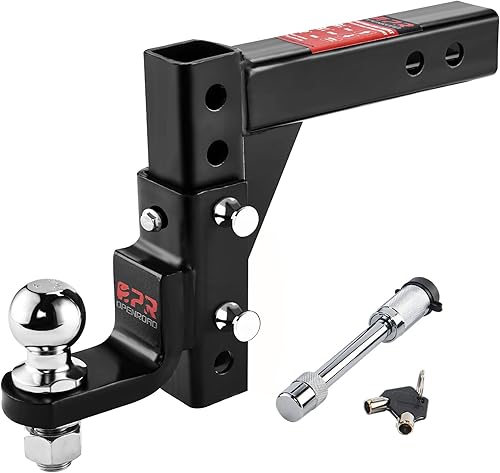
OPENROAD Adjustable Trailer Hitch Ball Mount is aimed at drivers who want adjustability with a cleaner, more polished appearance. The stainless finish helps resist rust, making it a solid choice for coastal areas or year-round towing. It supports a wide range of trailer heights and works well with boat trailers, campers, and utility haulers.
Beyond looks, the mount provides consistent performance under moderate to heavy loads. It’s especially appealing if your truck doubles as a daily driver and you don’t want a rough, unfinished hitch sitting out back.
Pros
- Adjustable height for multiple trailers
- Stainless finish resists corrosion
- Clean, modern appearance
- Good for regular towing use
Cons
- Pricier than basic steel mounts
- Stainless finish shows dirt easily
- Not intended for extreme heavy towing
How to Choose the Best Trailer Hitch Ball Mounts for SUV
Finding the best trailer hitch ball mounts for SUV is not a neat checklist thing, and you already know that. You think you do at least, until you stand behind your SUV staring at the receiver like it owes you money. One minute you feel confident, next minute your brain jumps to that time a trailer bounced weird on the highway and your stomach still remembers it. This topic pulls you sideways emotionally, not just mechanically, and yeah that matters.
SUV owners usually tow more than they admit. A jet ski once, a rented utility trailer twice, a camper you swear you will use every summer but mostly dont. That variety messes with ball mount choices fast, and your SUV suspension feels every bad decision quietly.
Why SUV towing feels different than trucks, and nobody explains it right
SUV frames sit in an awkward middle zone. Not quite full truck, not a soft crossover either. That means hitch height changes more than you expect once weight is added. You hook up a trailer, step back, and the whole thing looks like it is bowing politely. That angle, that tiny angle, is what ruins tires and moods.
Most SUVs fall into Class II or Class III hitch territory. Class III is the common one, rated up to 5000 lbs towing and 500 lbs tongue weight under SAE J684 standards. That number sounds big until you realize a loaded travel trailer can hit tongue weights near 10 to 15 percent of total trailer weight. Math sneaks up on you here, quietly but mean.
Ball mount drop and rise is where mistakes start piling up
Drop and rise sounds simple, like up or down, but it never stays that clean. Your SUV stock height is one thing, add passengers and gear and suddenly your rear sags an inch or two. You measure once, then load, then realize your measurement lied.
Most SUVs need a drop ball mount between 2 to 6 inches. Some lifted SUVs need a rise, which feels backward at first, like your brain rejects it. I once watched someone flip a mount upside down in a parking lot and act surprised when it worked better. That stuck with me.
Keep the trailer level, not almost level, not close enough. Level matters because axle load distribution goes off when the tongue points up or down. Studies from transport safety agencies show uneven trailer angles increase sway risk at highway speeds above 55 mph. That stat is boring but also terrifying.
Fixed ball mounts vs adjustable ones, the argument never ends
Fixed ball mounts are stubborn little chunks of steel. They do one thing well, and they refuse to adapt. If you tow the same trailer all the time, they feel honest, almost loyal. Less moving parts, less noise, less second guessing.
Adjustable ball mounts feel clever, sometimes too clever. Multiple height settings, removable pins, shiny finishes that make you trust them maybe too much. They are heavier, sometimes double the weight of a fixed mount. On an SUV, that extra weight at the rear can slightly affect handling, not huge but noticeable if you pay attention.
There is actual data backing this. Consumer towing tests show adjustable mounts often weigh 15 to 25 lbs more than fixed ones. That weight sits behind the axle, which adds leverage forces. Physics does not care if it looks cool.
Material strength is not just marketing noise
Steel is not just steel. Most quality ball mounts are forged steel, not cast. Forged steel handles stress better, especially shock loads like potholes or sudden braking. Cast mounts are cheaper, and sometimes fine, but they can crack under repeated stress cycles.
SAE testing requires mounts to survive specific load durations without deformation. If a mount flexes even slightly under rated load, it fails certification. You wont see that flex visually until it becomes a problem. That is the scary part, because failures happen quietly until they dont.
Powder coating helps against rust, but it chips. Chrome resists rust better but scratches show fast. Stainless steel exists, yes, but it costs more and is rare for higher capacity mounts.
Ball size confusion is more common than people admit
Two inch balls are most common for SUVs. One and seven eighths inch balls still exist, mostly for small utility trailers. Two and five sixteenths inch balls are for heavier loads, campers mostly.
Using the wrong ball size is not a minor oops. Trailer couplers can sit on a smaller ball and seem fine until a bump lifts it just enough. Accident reports show ball mismatch as a recurring cause of trailer detachment. That sentence makes your chest tighten, and it should.
Always match the coupler rating stamped on the trailer. Always. Even if someone says it worked last time.
Tongue weight ratings deserve more respect than they get
Tongue weight is not optional math. If your SUV hitch says 500 lbs tongue weight max, your ball mount must match or exceed that. Many people ignore this and just focus on towing capacity.
Statistics from highway safety reports show overloaded tongue weight contributes to rear axle overload and braking instability. It is not dramatic until it is, which is the worst kind of risk.
A good rule is tongue weight should be around 10 to 15 percent of trailer weight. Less and sway creeps in. More and your SUV squats like it is tired of life.
Clearance issues nobody thinks about until sparks happen
Ground clearance matters more with SUVs than trucks, especially on driveways and ramps. A long drop mount can scrape on speed bumps or steep exits. That scraping sound stays in your head longer than it should.
Shorter shanks help, but then turning clearance with the trailer tongue can suffer. It is always tradeoffs. Someone once told me towing is just choosing which compromise you hate least, and that feels accurate.
Real world testing beats spec sheets, every time
Lab ratings matter, but real roads are messy. Heat, vibration, rain, salt, all of it attacks your equipment slowly. Ball mounts that pass specs can still loosen hardware over time.
Periodic torque checks are boring but effective. Most ball nuts require torque in the 250 ft lb range. That number shocks people the first time they hear it. Hand tight is not a thing here, never was.
Noise, rattles, and the mental tax of towing
Rattle drives people insane. Adjustable mounts can clank unless fitted tightly. Anti rattle pins help, but they add another part to remember. Fixed mounts are quieter, but only if the receiver fit is snug.
Noise is not dangerous technically, but it distracts you. And distraction while towing is a real safety issue. Mental load counts, even if nobody writes it on the box.
Choosing what actually fits your SUV life
Ask yourself how often you tow, not how often you want to tow. If it is occasional, adjustable mounts make sense despite the weight. If frequent with one trailer, fixed mounts feel calmer.
Measure loaded hitch height, not empty. Match ball size exactly. Check tongue weight ratings twice. Think about clearance in your daily routes, not just highways.
You are not buying steel. You are buying fewer moments of white knuckle silence on the road. That is the honest part people skip.
And yeah, you might still second guess yourself at the gas station mirror. Everyone does. But if the trailer rides level, the SUV feels planted, and nothing clanks behind you, that is usually the sign you picked right, or close enough at least.
