
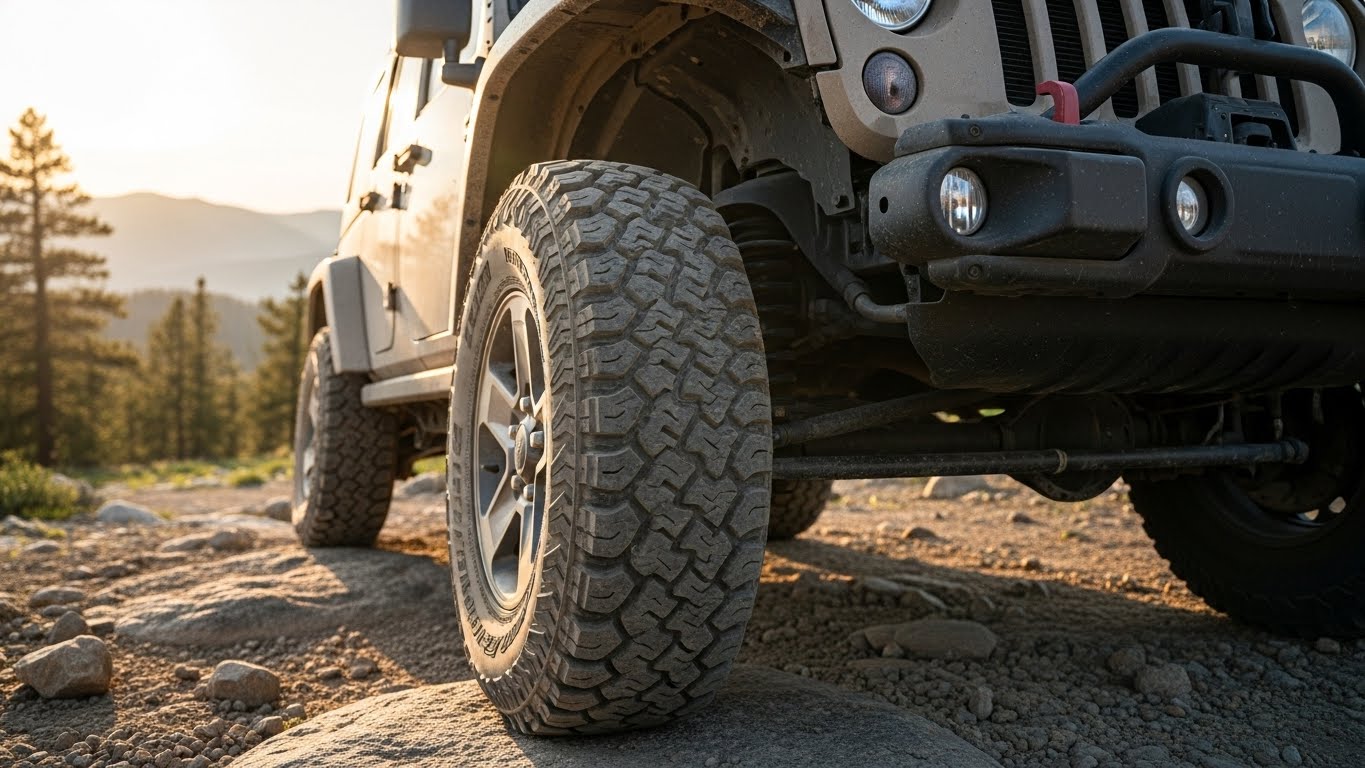
Your Jeep Wrangler doesn’t forgive weak parts, it remembers them, especially when the road disappears and the suspension starts talking back. Ball joints for Jeep Wrangler are one of those things you don’t think about until the steering feels sloppy or the tires start wearing funny, then suddenly it’s all you think about. You want tight control, not clunks, not wandering wheels, and definitely not something that taps out halfway through a trail run. After digging through specs, long-term use reports, and real-world abuse stories, one option keeps proving itself again and again as the most reliable choice: Rough Country Heavy Duty Replacement Ball Joints. They hold alignment better, last longer under stress, and don’t act surprised when your Wrangler gets used the way it was built to be used.
01. Rough Country Heavy Duty Replacement Ball Joints

Rough Country Heavy Duty Replacement Ball Joints are built for drivers who need rugged performance on Jeep Wrangler suspensions and similar off-road rigs. These heavy duty units take the place of worn factory ball joints and help restore proper steering response, reduce wander, and keep your control arms moving like they should. They’re crafted to handle the extra stress of lifted suspensions and bigger tires, so your steering geometry stays tighter even in rough terrain.
Installation is straightforward for anyone familiar with front suspension work, and once in place, these ball joints feel solid under load. Riders notice a firmer feel in steering and less play at the wheel after swapping out old, sloppy joints. If you’re running 4×4 trails, hitting rocky fire roads, or cruising pavement, these Rough Country ball joints support reliable steering performance on Jeeps built for adventure.
Pros
- Designed for lifted and stock Jeep Wrangler steering systems
- Heavy duty build tackles rugged terrain stresses
- Helps reduce play and improve steering feel
- Direct replacement for worn ball joints
Cons
- May require press tools for install
- Grease fittings may not be included
02. DV8 Offroad Upgraded Ball Joint Set
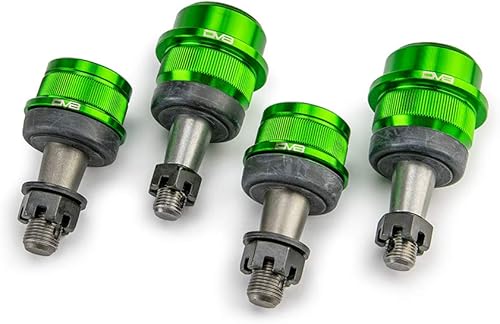
DV8 Offroad Upgraded Ball Joint Set is a beefier replacement option for Jeep enthusiasts who push their suspension hard on trails and rock crawls. These joints are greaseable and built to resist the wear that comes with lifted suspensions, larger tires, and constant flexing at the front end. The extra serviceability from the greaseable design helps you keep joints running smooth longer than non-serviceable replacements.
Installing this set gives your Jeep Wrangler or similar 4×4 a firmer steering feel and better handling through uneven ground. Because the joints are designed with off-road use in mind, they’re less prone to early wear under heavy flex conditions. If you’ve swapped bigger tires or added a lift and want a ball joint kit that can keep up with rugged daily driving and trail duty, this DV8 Offroad set checks those boxes.
Pros
- Greaseable design for longer service life
- Built to handle lifted suspension stresses
- Good for off-road use and daily driving
- Helps tighten steering response
Cons
- Installation may need special tools
- Grease maintenance required
03. Detroit Axle – Front Ball Joints
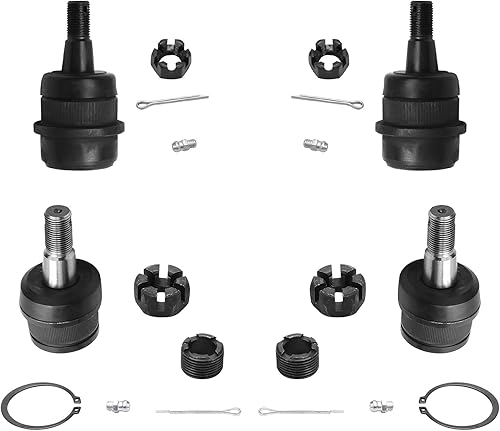
Detroit Axle Front Ball Joints are dependable replacement parts for a wide range of trucks and SUVs, offering solid performance without a premium price tag. These joints restore the ball-and-socket connection that lets your front wheels steer and move with your suspension’s up-down motion. When old ball joints wear out, you get loose steering and uneven tire wear — swapping in these units helps fix that.
These Detroit Axle joints match OE fitment so they drop into place on compatible models, and the sealed design helps keep dirt and debris out. That means you spend less time worrying about premature wear and more time on the road or trail. They’re a practical choice for anyone doing routine front suspension service or bringing a daily driver back to spec.
Pros
- Built to match original equipment fitment
- Sealed design keeps contaminants out
- Restores tight steering control
- Good value replacement option
Cons
- Not greaseable — service life depends on seal
- Not specifically heavy duty for lifted or extreme off-road rigs
04. GPMMWPG 10626 Heavy Duty Replacement Ball Joints
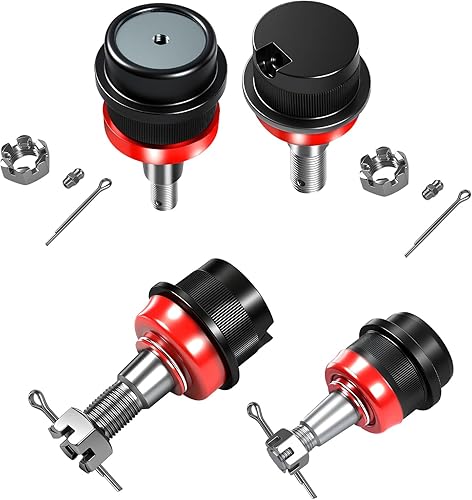
GPMMWPG 10626 Heavy Duty Replacement Ball Joints are engineered for vehicles needing extra durability in demanding driving conditions. These replacement joints fit directly in the suspension where worn connections cause play and uneven tire wear. With a heavy duty build, they take on rough roads and continuous front-end movement without folding up early.
These ball joints help improve front suspension feel and steering precision when installed in compatible trucks and SUVs. They go in with standard mounting hardware and deliver a robust connection that stands up to everyday driving plus harder impacts from potholes or gravel roads. If your vehicle’s front end is sloppy or noisy, these heavy duty replacements aim to restore confidence in your steering system.
Pros
- Heavy duty design for rugged use
- Durable materials help manage load stresses
- Improves steering responsiveness
- Direct replacement fit
Cons
- May require press tools for install
- Not specific to lifted suspension gear
05. HHCM Front Upper Lower Ball Joint Kit
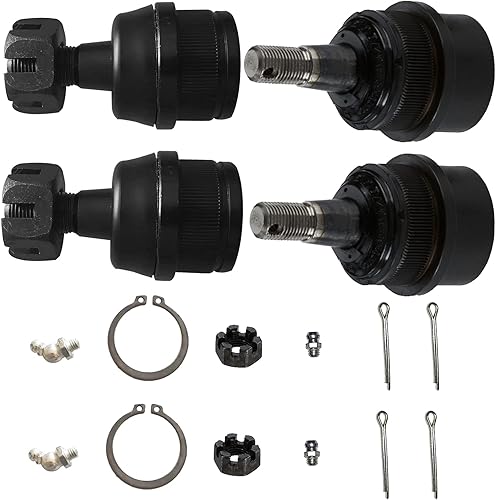
HHCM Front Upper Lower Ball Joint Kit brings complete front-end service in one package, covering both upper and lower joints for select Cherokee and Wrangler models. This kit makes sense when you’re refreshing the entire steering pivot area, not just a single worn part. With both joints replaced at once, your suspension feels more balanced and consistent under load.
The kit components aim for OE-style fitment so tightening torque and operation feel familiar during installation. With fresh ball joints at both upper and lower positions, steering play is reduced and tire wear becomes more even, helping you get better life from your front tires. For Jeep owners refreshing aging front suspension components, this kit brings everything you need in one go.
Pros
- Includes both upper and lower ball joints
- Helps restore steering stability and reduce play
- OE-style fitment for compatible models
- Good choice for full front suspension service
Cons
- Installation takes more time than single joint swaps
- May need press tools and some experience
How to find the Ball Joints for Jeep Wrangler.
You do not wake up thinking about ball joints, yet somehow your Jeep Wrangler keeps dragging you there. One clunk becomes two, steering feels loose like a shopping cart with a bad wheel, and you start guessing noises that were not there yesterday. You tell yourself it’s fine. Then you hit a pothole and nope, not fine.
Finding the right ball joints for Jeep Wrangler is not clean or tidy thinking. It’s messy, with grease under fingernails and too many tabs open in your head. You start confident, then second guess everything. That’s normal, even if nobody says it.
Why ball joints even matter more than you expect
You think ball joints are small parts, like whatever, a bolt with a job. But they carry a wild amount of stress. Front axle weight, steering forces, suspension travel, all stacked on a metal sphere not much bigger than a coin. That’s kind of insane when you pause.
On solid axle Wranglers, which is most of them unless you’re talking newer trims, each side usually has an upper ball joint and a lower ball joint. The lower one takes most of the load, always. That part works harder, wears faster, complains louder.
There’s data floating around from fleet and off road maintenance reports showing front suspension components on lifted Wranglers can wear up to 2 to 3 times faster than stock height setups. Not shocking, still annoying.
You don’t notice ball joints when they’re good. You really notice them when they’re not.
Which Wrangler you actually own matters more than brand hype
You say “I have a Jeep Wrangler” like that explains everything. It doesn’t. A JK, JL, TJ, YJ, all different animals wearing similar faces. Even within JKs, early years and later years have different front axle specs depending on Dana 30 or Dana 44.
You need to slow down here. Year. Generation. Axle type. Lift height. Tire size. These are not optional details. Skipping one leads to wrong parts, return shipping, mild rage.
A Wrangler running stock 32 inch tires on factory suspension has very different ball joint needs compared to one rolling 35s with a 3 inch lift and steel bumpers. That second Jeep eats ball joints. Not metaphorically. Literally chews them.
Stock replacement vs heavy duty
You start by thinking, I’ll just replace what came from the factory. Reasonable thought. But factory style ball joints are designed for factory geometry. Once you add lift or larger tires, angles change. Load increases. Wear accelerates.
Heavy duty ball joints exist for a reason. Stronger housings. Better stud design. Higher load ratings. Some use sintered metal bearings, others use chromoly internals. Sounds impressive, sometimes is.
But here’s the trap. Overbuilt ball joints with extremely tight tolerances can actually stress the axle C over time. That’s not internet panic, that’s physics. Too stiff means forces transfer elsewhere.
So you’re choosing a balance, not perfection. Strong enough, not stubborn.
Greasable or sealed
You’ll hear arguments like campfire debates that never end. Greasable ball joints are good because you can service them. Sealed ball joints are good because dirt cannot get in. Both sides are half right, half dramatic.
If you off road often, especially mud or water crossings, grease points help flush contaminants. But only if you actually grease them. Many people don’t. Then it’s pointless.
Sealed joints rely on factory lubrication and better sealing materials. Less maintenance, but once contamination enters, game over.
Industry testing data shows properly maintained greasable joints can outlast sealed units by significant margins, sometimes double the service life, but neglected greasable joints fail sooner than sealed ones. Human behavior ruins good engineering. Always.
Symptoms you should not ignore even if you want to
You feel a pop when turning. Steering wheel doesn’t center right. Tires wear uneven, especially cupping. Front end feels vague, floaty, uncertain. These are not personality traits, they are warnings.
There’s a common test where you jack up the front axle and pry under the tire, watching for vertical movement. Any play is bad. Any. Wrangler ball joints should not have noticeable vertical movement, zero tolerance basically.
Studies from inspection stations show worn ball joints are among the top causes of steering related inspection failures on solid axle vehicles. You don’t want that roadside surprise.
Lift height quietly decides your ball joint future
A mild 1.5 inch leveling kit might not murder ball joints immediately. A 4 inch lift with stock control arms will. Geometry matters whether you respect it or not.
Increased caster correction can help. Upgraded control arms can help. But ball joints still see more angle. That’s math, not opinion.
You should be honest with yourself. If you wheel hard, tow occasionally, or run heavy accessories, your ball joints live a harder life. Choosing parts pretending otherwise is wishful thinking, and wishful thinking breaks on trails.
Installation pain you should mentally prepare for
Ball joints are pressed in. Pressed out. Sometimes fused by rust and resentment. You will swear. Or pay someone who swears for you.
Improper installation causes premature failure. Crooked seating, damaged boots, wrong torque values, all shorten lifespan. Torque specs matter here more than vibes.
Shops report a noticeable percentage of early ball joint failures come from install error, not part quality. That’s uncomfortable to hear, still true.
How long they should last and why that answer annoys you
On stock Wranglers with street use, ball joints often last 70,000 to 100,000 miles. Lifted and off road rigs can see failure in 20,000 to 40,000 miles. Sometimes less if alignment is off.
There’s no universal lifespan. Terrain, driving style, maintenance, load, all pile in. Anyone giving a single number is lying or oversimplifying.
You don’t want the cheapest option. You don’t need the most extreme either. You want something that matches how you actually drive, not how you like to imagine you drive.
Final thoughts
Finding the right ball joints for Jeep Wrangler is part research, part honesty, part accepting tradeoffs. You read forums. You listen to opinions. You still feel unsure. That’s okay.
The goal isn’t perfection. It’s avoiding repeat repairs, avoiding steering slop, avoiding that awful moment when a front wheel starts doing its own thing.
