
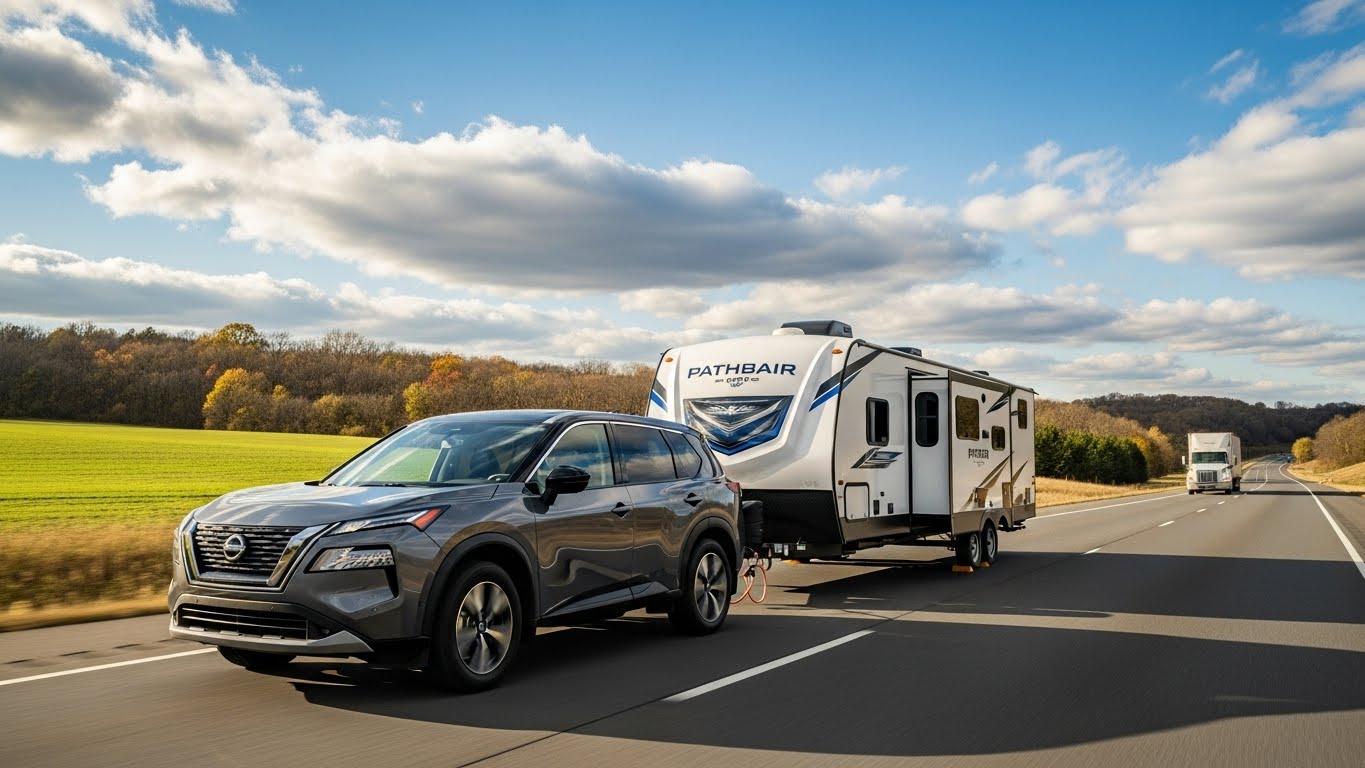
Finding the right trailer hitch for Nissan Pathfinder isn’t just about towing numbers written on a box, you already know that. You’re dealing with boat ramps, uneven campgrounds, sudden braking, and that awkward moment when the load feels heavier than expected. The Pathfinder can tow well, sure, but only if the hitch doesn’t flex, creak, or make you second-guess every mile. After sorting through fitment details, steel thickness, real-world towing use, and install headaches people quietly complain about, one option keeps making sense for everyday towing plus long trips. The ECOTRIC Class 4 Trailer Hitch stands out as the best choice because it fits clean, handles serious weight without drama, and doesn’t feel like a compromise once it’s bolted on.
Best 5 Trailer Hitches for Nissan Pathfinder
01. ECOTRIC Class 4 Trailer Hitch

The ECOTRIC Class 4 Trailer Hitch is aimed at Nissan Pathfinder owners who want higher towing strength without stepping into custom fabrication. Built from thick steel with a black powder-coated finish, this hitch is commonly used for utility trailers, boat trailers, cargo carriers, and heavy-duty bike racks. The 2-inch receiver opening works with standard hitch accessories, making it practical for both towing and hauling gear.
Fitment is designed around factory mounting points, so drilling usually isn’t required, though the hitch itself is on the heavier side. Once installed, it feels planted and stable, especially under load. This is more of a work-focused hitch than a lightweight weekend option, so it suits drivers who actually tow, not just occasionally mount a rack.
Pros
- Class 4 rating for higher towing capacity
- Thick steel construction with powder-coat protection
- Standard 2-inch receiver compatibility
- Works well for trailers, carriers, and towing gear
Cons
- Heavier than Class 3 alternatives
- Installation can take time due to weight
- Instructions may be basic
02. TIOYAR Trailer Hitch
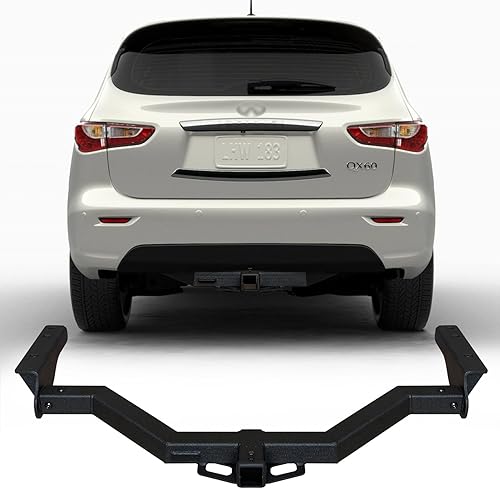
The TIOYAR Trailer Hitch is built for Pathfinder drivers who want a clean, functional hitch mainly for light towing and rear accessories. It supports common setups like bike racks, cargo trays, and small trailers, making it a good option for daily driving with occasional hauling needs. The steel frame comes finished in black to resist rust from road grime and weather exposure.
Install is typically bolt-on using factory holes, and the overall profile stays fairly tucked under the bumper. This keeps ground clearance reasonable while still giving you a usable hitch receiver. It’s not meant for constant heavy towing, but for moderate loads, it does its job without drama.
Pros
- Straightforward bolt-on design
- Suitable for bike racks and light trailers
- Clean fit under the rear bumper
- Standard 2-inch receiver
Cons
- Lower towing limits than Class 4 options
- Not ideal for frequent heavy loads
- Hardware quality can vary
03. CURT 13309 Class 3 Trailer Hitch

The CURT 13309 Class 3 Trailer Hitch is a well-known option among Nissan Pathfinder owners who want dependable towing without guessing on fit or strength. It’s commonly used for small campers, utility trailers, and hitch-mounted cargo carriers. The welded steel construction feels solid, and the black powder-coat finish holds up well against corrosion over time.
Installation is designed around factory mounting points and usually goes smoothly with basic tools. Once mounted, the hitch sits solidly with minimal movement, even when supporting loaded accessories. This is a balanced choice for people who tow regularly but don’t need Class 4 capacity.
Pros
- Proven Class 3 towing capability
- Strong welds and durable steel build
- Compatible with common towing accessories
- Consistent fit across supported models
Cons
- Not rated for heavy commercial towing
- Heavier than some budget hitches
- Clearance depends on vehicle trim
04. KUAFU Class 4 Trailer Hitch

The KUAFU Class 4 Trailer Hitch targets drivers who want maximum strength for their Pathfinder without stepping into custom hitch pricing. It’s built for serious towing tasks like boat trailers, equipment trailers, and loaded cargo platforms. The thick steel frame and reinforced receiver give it a sturdy feel once installed.
Because of the Class 4 rating, the hitch itself is bulky and installation may need a second set of hands. After mounting, though, it stays firm and inspires confidence when pulling heavier loads. This is a better fit for towing-focused setups rather than occasional accessory use.
Pros
- Class 4 rating for higher towing demands
- Reinforced steel construction
- 2-inch receiver fits standard accessories
- Suitable for heavy trailers and carriers
Cons
- Heavier and bulkier than Class 3 hitches
- Install can be physically demanding
- Overkill for light-duty use
05. CURT 13512 Class 3 Trailer Hitch

The CURT 13512 Class 3 Trailer Hitch is designed for drivers who want a reliable, factory-style towing solution for the Nissan Pathfinder. It supports common needs like bike racks, cargo baskets, and moderate towing without adding unnecessary weight. The hitch frame is precision-welded and finished in black powder coating for long-term durability.
Fitment is generally clean and bolt-on, keeping the receiver positioned neatly under the bumper. This makes it easy to live with day to day, especially if you’re using rear-mounted accessories more than towing heavy trailers. It’s a practical middle-ground hitch for mixed use.
Pros
- Clean bolt-on installation
- Class 3 strength for moderate towing
- Durable powder-coated steel
- Works well with racks and carriers
Cons
- Not suited for heavy trailers
- Receiver height may limit steep driveway angles
- Less capacity than Class 4 alternatives
How To Choose The Best Trailer Hitches for Nissan Pathfinder
You start thinking about best winches for Nissan Pathfinder at weird times. Like when you are parked just fine, coffee cooling down, then memory hits. That one time the Nissan Pathfinder slid into soft mud and everybody stood around pretending they knew traction tricks. You laugh now, but your palms remember it. This is where the winch thought sneaks in, slow and annoying, refusing to leave.
Finding the right winch for Nissan Pathfinder is not shopping, it feels more like problem solving with emotions mixed in. You want strength, but not silly strength. You want reliability, but not something that screams military surplus. And weight matters more than people online admit, yes it does.
Weight ratings
Most Nissan Pathfinder models weigh somewhere between 4,300 to 4,600 pounds depending on year, trim, gear, mood of the fuel tank. Rule that keeps floating around off-road circles says winch capacity should be 1.5 times vehicle weight. That puts you roughly in the 6,500 to 7,500 pound pull range. Sounds simple, then doubt enters.
You see 9,500 lb winch numbers everywhere. Overkill maybe, but overkill has saved people, you hear stories. One guy tried pulling uphill, wet clay, bad angle, battery crying. His 8,000 lb unit stalled halfway like it lost faith. That story sticks, even if you dont know him.
Data wise, recovery trainers often note most real pulls exceed static vehicle weight by 20 to 50 percent once suction, slope, and wheel drag join the party. So yeah, math gets messy quick.
Steel cable or synthetic rope
Steel cable feels old-school strong. You touch it and trust it, until you remember rust, burrs, gloves forgotten at home. Synthetic rope feels modern and forgiving, lighter by about 10 to 15 pounds on average. That weight difference matters on a Pathfinder front suspension, especially if you already run skid plates or a bull bar.
Synthetic also stores less kinetic energy. When it snaps, it drops instead of whipping like an angry snake. Recovery safety studies from off-road training programs show lower injury rates with synthetic lines. Not zero, just lower. That stuck in my head.
But synthetic hates UV, hates dirt inside fibers, hates neglect. You forget to clean it once and it sulks quietly.
Mounting reality hits harder than spec sheets
Not every Nissan Pathfinder welcomes a winch without drama. Factory bumpers usually say no. You look at them closely and realize they were designed for parking lot taps, not recovery loads. So you start thinking winch mount plate, or aftermarket bumper, or custom bracket someone welded in their garage at 2am.
Important thing people skip is airflow. Blocking radiator airflow on Pathfinders, especially older VQ-powered ones, can raise coolant temps during slow pulls. Recovery instructors mention winching loads can spike transmission temps too, since engine stays under load without airflow. You wont notice until later, which is worse.
Electrical system
A winch doesnt care about your optimism. It wants amps, lots of them. Many SUV winches can draw 300 to 400 amps at full load. Stock Pathfinder batteries handle short pulls fine, but long recovery sessions tell a different story.
Some data from off-road electrical testing shows voltage drop below 10 volts can reduce winch pulling power by over 20 percent. That is not a small oops. Upgraded battery, good ground connections, maybe even dual battery if you push it often. You tell yourself you wont, but trails have opinions.
Line speed
Everyone brags about pulling power, few mention line speed. Slow winches feel safe until you are blocking a trail, snow falling, daylight slipping. Faster line speed under load keeps things moving, keeps batteries happier, keeps nerves calmer.
Numbers vary, but many mid-range winches pull around 6 to 8 feet per minute under load. Faster than that feels luxurious when cold fingers involved. Slower feels like punishment for past mistakes.
Solenoids, remotes, and small parts
You probably think motor and drum matter most. True, but solenoids fail more often than motors according to repair tech chatter. Heat, moisture, vibration, they all conspire. Sealed contactors last longer, generally speaking, and that is not marketing fluff.
Wireless remotes sound cool until they dont connect. Wired remotes feel boring until they save the day. Many seasoned users carry both, even if they wont admit it loudly.
Weather, mud, snow, and Pathfinder personality
Best winch for Nissan Pathfinder depends on where you get stuck, not where you dream of going. Mud needs steady torque. Snow needs smooth control. Sand needs patience and sometimes a double line pull using a snatch block, which doubles pulling power but halves line speed. Physics is rude like that.
Real recovery data from off-road training groups shows double line pulls reduce motor strain significantly, sometimes cutting amp draw by nearly half. But people forget blocks at home. Or they forget how to rig them. Practice matters, boring practice.
Price
Cheap winches work until they dont. Expensive ones hurt upfront but fade into background later. This is not wisdom, just pattern recognition from too many forum nights. Reliability stats are hard to verify, but failure stories cluster around water intrusion and poor electrical connections more than raw motor failure.
You realize at some point that the best winch is the one you trust enough to actually use, not baby. Hesitation during recovery causes more trouble than mechanical limits.
Conclusion
You circle back to your Nissan Pathfinder, look at its front end, imagine the weight, the pull, the moment when tires spin uselessly. A winch is not about ego, its about options. Quiet options that sit there until needed.
You might overspec. You might underspend. You might change your mind three times before buying. That is normal. Finding the best winches for Nissan Pathfinder feels less like a checklist and more like a conversation with future-you, who is stuck somewhere and hoping you made decent choices.
And yeah, you probably will still get stuck again. But this time, you pull yourself out, heart racing, laughing a little too loud, pretending it was all part of the plan.
