

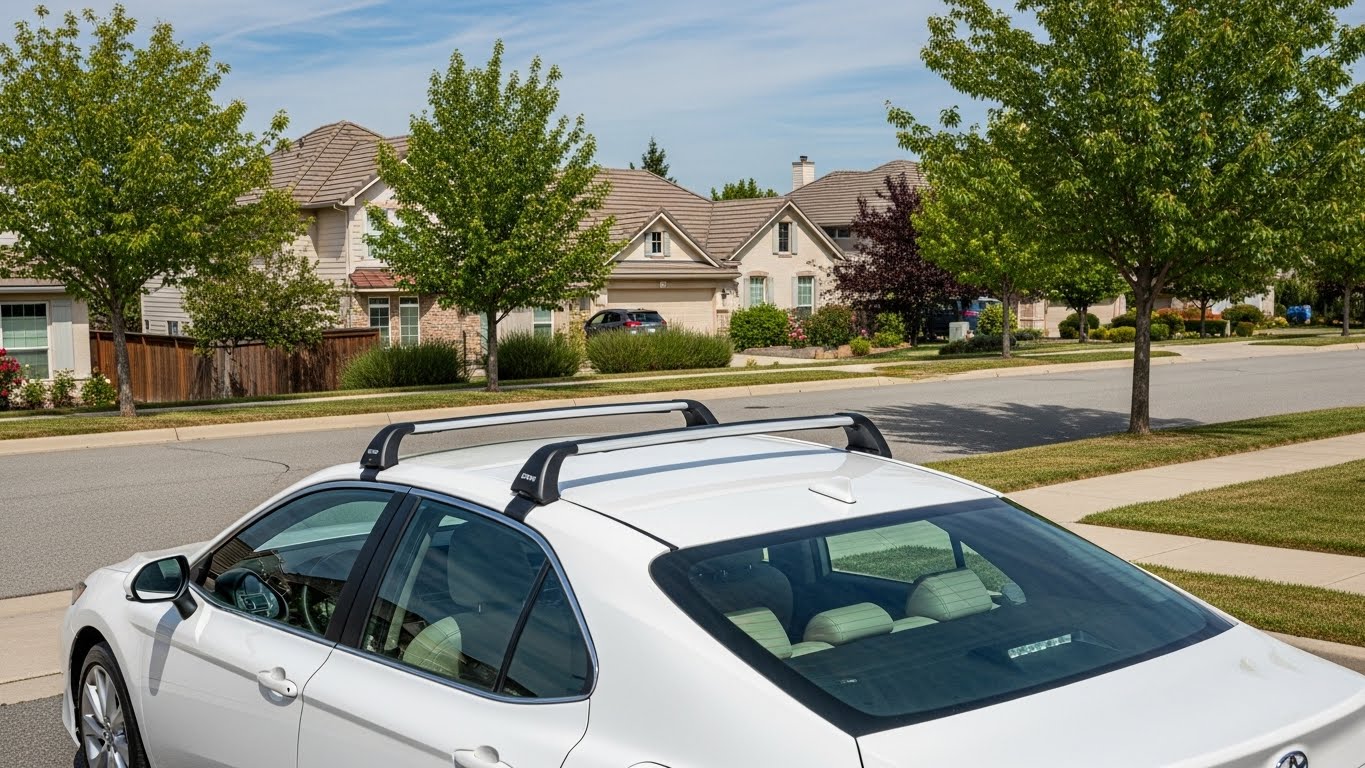
Finding the right roof rack cross bars for Toyota Camry is one of those things you think is simple, until it’s not. You want something that fits clean, doesn’t whistle at highway speed, and won’t flex the moment you load a bike, cargo box, or a couple of boards. The Camry isn’t built like an SUV, so balance matters, weight ratings matter, and honestly, trust matters too. After sorting through fit issues, real-world use cases, and the kind of complaints people only mention after six months of driving, one option keeps proving itself as the safest bet and the least annoying to live with — the TINIANHHCT Roof Rack Cross Bars. It just works, stays quiet, and doesn’t feel like a gamble every time you tighten it down.
Best 5 Roof Rack Cross Bars for Toyota Camry
01. TINIANHHCT Roof Rack Cross Bars
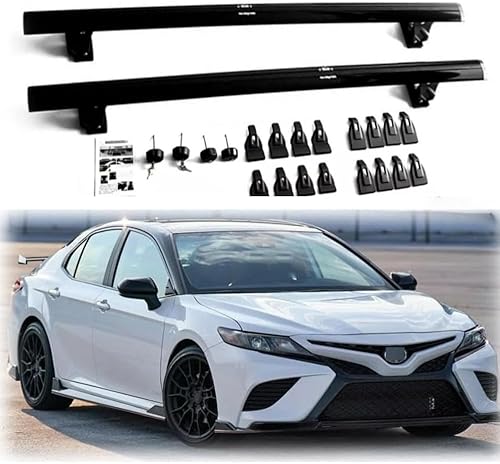
The TINIANHHCT Roof Rack Cross Bars are built for drivers who need extra carrying space without messing around with complicated setups. Designed to fit select 2018–2023 vehicles with factory side rails, these crossbars are commonly used for hauling kayaks, skis, snowboards, roof boxes, cargo baskets, and bike racks. The aluminum alloy build keeps the weight reasonable while still handling everyday outdoor gear, road trips, and weekend hauling. Wind noise stays mostly under control at highway speeds, though it can vary depending on load and vehicle shape.
Installation is fairly straightforward for a clamp-on roof rack system, making it suitable for DIY installs without special tools. These cross bars are often compared with OEM-style crossbars, flush rail roof racks, and aftermarket roof rack systems, especially by owners looking for a lower-cost alternative. They work well for light to medium cargo but are better suited for recreational gear rather than heavy construction loads or oversized cargo carriers.
Pros
- Compatible with many 2018–2023 vehicles that have factory side rails
- Lightweight aluminum construction helps with fuel efficiency
- Suitable for kayaks, snowboards, skis, roof boxes, and bike mounts
- Tool-free or minimal-tool installation for most vehicles
Cons
- Not designed for extremely heavy rooftop loads
- Fitment depends heavily on having compatible factory side rails
- Wind noise can increase when driving at higher speeds
- Limited adjustability compared to premium brand crossbars
02. Hawksauto Roof Rack Cross Bars
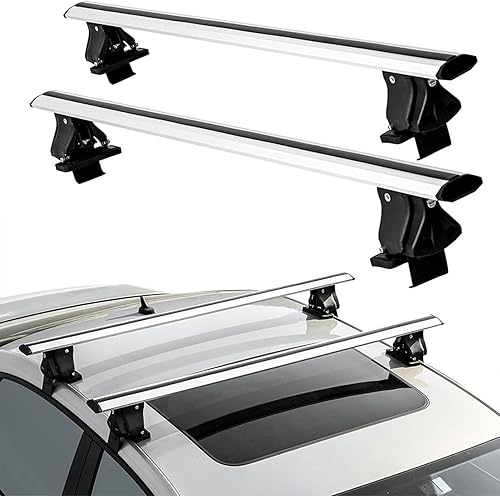
Hawksauto Roof Rack Cross Bars are built for drivers who need extra cargo space without messing with factory rails. Designed to fit select 2017–2024 vehicles, these adjustable, lockable crossbars work well for hauling a cargo box, kayak rack, bike carrier, or even a small roof basket. The aluminum construction keeps weight down while still handling daily loads like camping gear, ladders, or travel bags. Installation is fairly straightforward if you’ve handled OEM-style roof rails before, and once mounted, the bars sit low enough to reduce excess wind noise compared to bulkier universal roof racks.
For everyday road trips or occasional outdoor runs, these cross bars cover the basics most SUV and crossover owners look for. The lock system adds a bit of peace of mind when parked, and the adjustable width helps match different roof rail spacing. That said, they’re more aimed at moderate cargo needs rather than heavy-duty overlanding setups. If you’re pairing them with well-known brands like Thule-style accessories or Yakima-compatible mounts, double-check clamp fit and weight limits before loading up.
Pros
- Compatible with many 2017–2024 models with factory roof rails
- Lockable design helps deter casual theft
- Lightweight aluminum build supports common roof accessories
- Adjustable crossbar spacing for better fitment
Cons
- Not ideal for very heavy or commercial-grade loads
- Fitment can be model-specific, needs careful checking
- Instructions could be clearer for first-time installs
03. Generic Roof Rack Cross Bars

The Generic Roof Rack Cross Bars are built for everyday hauling without making things complicated. Designed to fit factory side rails on compatible SUVs and crossovers, these aluminum crossbars handle roof cargo boxes, bike racks, kayak carriers, skis, and snowboard mounts without fuss. The low-profile shape helps cut down wind noise compared to bulky steel bars, and the clamp-on setup makes them a solid option if you don’t want drilling or permanent mods on your vehicle roof.
For daily road use, weekend gear runs, or longer highway drives, these roof rack cross bars offer decent load support for luggage, camping gear, and outdoor equipment. They work well with common roof rack accessories and rooftop carriers, making them useful for families, road trips, and outdoor trips where trunk space just isn’t enough. Not premium-level hardware, but practical for drivers who want function first and less hassle overall.
Pros
- Lightweight aluminum construction resists rust and weather wear
- Compatible with roof cargo boxes, bike racks, kayak racks, and ski carriers
- Clamp-on design allows quicker installation and removal
- Aerodynamic profile helps reduce whistling at highway speeds
- Works well for SUVs and crossovers with raised side rails
Cons
- Not ideal for extremely heavy rooftop loads
- Instructions may feel basic for first-time roof rack users
- Fit depends heavily on vehicle side rail shape
- Locking hardware is basic compared to higher-end brands
04. OMAC Roof Rack Cross Bars

OMAC Roof Rack Cross Bars are built for drivers who want a solid, no-nonsense way to carry extra gear without messing around with factory rails too much. These aluminum crossbars sit low, lock in place with an anti-theft system, and are shaped to keep wind noise fairly under control compared to bulkier roof rack systems. They’re commonly paired with roof boxes, kayak racks, ski carriers, bike mounts, and cargo baskets, making them a practical option for daily driving mixed with weekend hauling.
Fitment is vehicle-specific, which helps with stability but also means you need to double-check compatibility before ordering. The aluminum construction keeps weight down while still handling rooftop loads like luggage, camping gear, or sports equipment. For commuters and road-trip drivers who want usable roof storage without oversized aftermarket racks, these cross bars land in a comfortable middle ground.
Pros
- Aluminum build keeps overall vehicle weight lower
- Lockable anti-theft design adds basic security
- Compatible with roof boxes, bike racks, kayak carriers, and ski mounts
- Low-profile shape helps reduce wind drag and whistling
Cons
- Vehicle-specific fit limits flexibility between cars
- Installation instructions can feel a bit rushed
- Not ideal for very heavy commercial cargo setups
05. YQLINKTOP Aluminum Cross bar
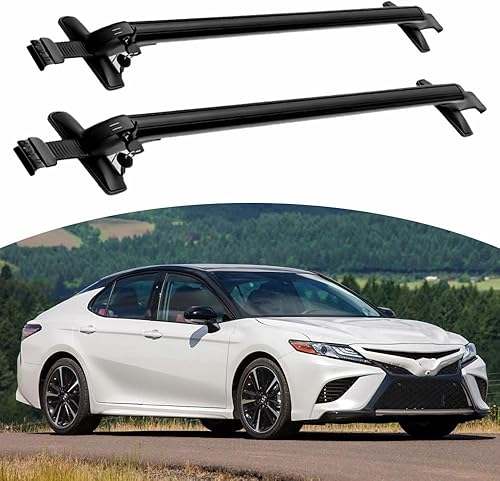
The YQLINKTOP Aluminum Cross Bar is built for drivers who need a straightforward roof rack setup for Toyota models from 2018–2022. It fits factory side rails and uses a low-profile aluminum design that keeps wind noise fairly controlled at highway speeds. For everyday hauling—things like a roof cargo box, bike rack, kayak carrier, or even a light luggage carrier—this crossbar set handles the job without feeling flimsy. The matte finish blends well with most factory roof rails, so it doesn’t look out of place on a daily commuter.
Installation is mostly bolt-on, no drilling needed, which makes it appealing if you don’t want to mess with permanent changes. The aluminum construction helps with rust resistance, especially in wet or snowy regions, and the load capacity is suitable for weekend trips and normal outdoor gear. It’s not a heavy-duty overland setup, but for standard roof rack needs on Toyota SUVs and crossovers, it stays practical and budget-aware.
Pros
- Aluminum cross bars help reduce overall vehicle weight
- Compatible with Toyota models from 2018–2022 with factory rails
- Works with cargo boxes, bike mounts, ski racks, and kayak racks
- Clean, low-profile look that doesn’t overpower the roofline
- No-drill installation saves time and effort
Cons
- Not intended for extreme off-road or oversized rooftop loads
- Limited compatibility outside listed Toyota vehicles
- Instructions could be clearer for first-time roof rack installs
How to Choose The Cross Bars for Toyota Camry
Choosing cross bars for a Toyota Camry feels simple until you actually start thinking about it, then suddenly it’s not. You stare at your roof, smooth and polite, not screaming “I was made for cargo,” and you wonder if you’re about to do something slightly wrong. Camry is a sedan after all. A calm car. Not a loud outdoor gear mule. But still, people haul bikes, kayaks, roof boxes on it every single day, so clearly it’s possible. Just not idiot-proof.
First, admit what the Camry is and what it isn’t
A Toyota Camry is not a 4Runner, not a RAV4, not pretending to be a truck. It has a unibody frame, a lower roofline, and usually no factory side rails. That matters. Cross bars on a Camry depend heavily on how they mount. Door jamb mounted systems are the most common. Clamp-style feet grab the roof edge, pads sit on painted metal, tension does the rest.
Toyota never meant the Camry to carry half your apartment on top. Roof load ratings reflect that. Most Camry models fall around 100 to 165 lbs dynamic load, depending on year and roof design. Dynamic meaning while driving, not parked. Static loads can be higher, but that’s not how you travel. Ignore this number and the roof will remind you later with dents or wind noise that sounds like a dying flute.
Fitment is not a suggestion, it’s survival
This is where people mess up. Cross bars are not universal in the way socks are universal. Toyota Camry 2012 roof shape is not the same as Toyota Camry 2020. Door frame curves change. Roof width changes. Even the slope angle from windshield to roof matters. A bar that fits “most sedans” is basically saying “good luck.”
Proper cross bars will list exact model years. If they don’t, pause. I once saw a guy tighten generic bars so hard his door wouldn’t close right. He drove like that for a week, rain leaking in, refusing to admit defeat. Pride is expensive.
Weight ratings, the quiet numbers nobody reads
Cross bars have their own load rating, separate from the car. You take the lower number. Always. If the bars are rated at 150 lbs but the Camry roof is rated at 120 lbs, congratulations, your real limit is 120. And that includes the weight of the bars themselves.
A typical aluminum cross bar set weighs around 8 to 12 lbs. Add a roof box, maybe another 35 to 45 lbs empty. Suddenly your usable cargo weight shrinks fast. People forget this and then blame the car when handling feels floaty on the highway. Physics doesn’t care about brand loyalty.
Aerodynamics, or why your quiet sedan starts screaming
Camrys are quiet cars. That’s part of the appeal. Add cross bars and suddenly there’s a whistle at 45 mph that wasn’t invited. Bar shape matters here. Square bars are cheap and strong, but they catch air like a brick. Aero shaped bars reduce drag and noise significantly. Wind tunnel tests from automotive accessory labs have shown aero bars reduce drag noise by up to 40 percent compared to square profiles.
Still, even good bars make noise. That’s normal. If someone tells you “zero noise,” they’re lying or deaf. Fair warning.
What are you actually carrying, be honest
This part feels obvious but people lie to themselves. You think you’re buying cross bars for “occasional use,” then three months later there’s a cargo box permanently mounted, full of camping gear and regret.
- Bikes need spacing and stability.
- Kayaks need width and strong clamp pressure.
- Roof boxes need even weight distribution and forward clearance so the trunk opens fully.
A Camry trunk opening is generous but long roof boxes can interfere. Measure twice. Or once, then realize your mistake loudly in a parking lot.
Installation, the moment of truth
Installing cross bars on a Camry is not hard, but it’s easy to do badly. Torque matters. Uneven tightening causes bars to shift under load. Most manufacturers specify torque ranges like 5 to 8 Nm. Hand-tight “until it feels snug” is not precision.
Also, paint protection pads matter. Cheap bars sometimes have thin rubber feet. Over time, dust gets trapped underneath, scratches happen. It’s subtle damage, but it stays. Ask anyone who removed bars after two years and found dull marks baked into the clear coat.
Fuel economy changes, small but real
Roof bars affect mileage even when unloaded. Tests by transportation research groups show roof racks can reduce fuel efficiency by 2 to 5 percent when empty, more when loaded. On a Camry that normally gets 30 mpg combined, that’s noticeable over a long commute. Remove bars when not in use if you care about that. Many people don’t. Then they complain about gas prices instead.
Security and theft paranoia
Camrys don’t scream “adventure vehicle,” which actually helps. Still, locking cross bars are worth considering. Non-locking bars can be removed in minutes. I’ve seen it happen at trailheads and apartment parking lots. Lock cores don’t make theft impossible, but they make it annoying enough that thieves move on. Annoyance is your friend.
Final messy thought
Choosing cross bars for a Toyota Camry is less about maxing out specs and more about respecting limits. The car will do the job if you don’t bully it. Pick bars that fit your exact year, stay within roof load ratings, accept a little wind noise, and don’t pretend it’s an SUV. Sedans can carry gear, just quietly, politely, and with boundaries.
