

Choosing the right roof rack cross bars for Toyota Highlander isn’t some tiny add-on decision, it kind of decides whether your weekend plans feel smooth or just annoying. You load gear, you hear wind noise, you second-guess tightness at red lights, that stuff adds up fast. The Highlander roof line looks simple, but it’s picky about fit and spacing, and yeah you notice when bars don’t sit right. After checking load ratings, mounting styles, real-world use, and how often people complain later, one option keeps coming back as the safest bet. The KINGGERI Lockable 260lbs Cross Bars Roof Racks ends up being the best overall choice because it handles weight evenly, stays quiet at highway speeds, and doesn’t feel flimsy after months of use, even when you push it a little.
Best 5 Roof Rack Cross Bars for Toyota Highlander
01. KINGGERI Lockable 260lbs Cross Bars Roof Racks
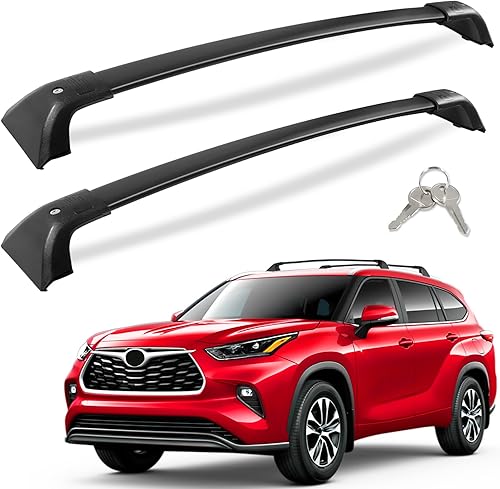
The KINGGERI Lockable 260lbs Cross Bars Roof Racks are made for drivers who actually load up their Toyota Highlander roof rails instead of leaving them unused. These lockable roof rack cross bars clamp onto flush-style rails and stay put, even when carrying a full 260 lbs rated load. The aluminum build feels solid in hand and works well for cargo boxes, kayak carriers, bike racks, ski mounts, and rooftop bags. Install is tool-light and avoids drilling, which makes it a reasonable option for people who swap accessories often or remove the bars between trips.
On longer drives, these Highlander crossbars stay stable and don’t bounce around once tightened correctly. There is some wind sound at higher speeds when the bars are bare, but it’s not the sharp whistle cheaper roof racks sometimes produce. The non-corrosion aluminum design holds up well in rain, snow, and sun exposure, making it a usable year-round setup for commuting, travel, or hauling gear when trunk space just isn’t enough.
Pros
- 260 lbs load capacity supports roof boxes, bikes, kayaks, and roof baskets
- Lockable mounting system helps reduce casual theft
- Aluminum construction resists rust and weather wear
- Designed to fit Toyota Highlander flush roof rails
Cons
- Mild wind noise when driving without mounted accessories
- Lock mechanism feels basic rather than heavy-duty
- Only compatible with specific Highlander roof rail styles
02. Autekcomma Heavy Duty Roof Rack Cross Bars
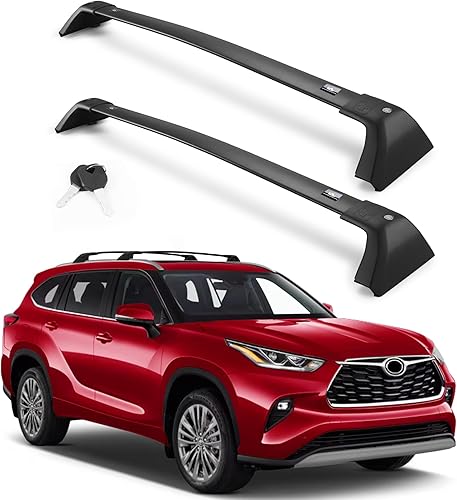
The Autekcomma Heavy Duty Roof Rack Cross Bars are rugged roof rack crossbars built to handle real hauling needs on your Toyota Highlander roof rails. These heavy-duty bars are made from thick aluminum alloy with a solid finish that stands up to rain, sun, and road grit. With a high load capacity, these crossbars are ready for cargo boxes, mountain bikes, kayak carriers, ski racks, rooftop tents, and bulky gear you can’t fit inside. The tapered aerodynamic shape trims down wind drag more than basic bars, which can make a difference on longer highway stretches.
Installation stays straightforward for someone comfortable with basic tools, and the clamps lock onto the Highlander flush-style rails tight without wobble. The sturdy build feels less like an add-on and more like a permanent hauling partner when you need it. On empty runs you’ll hear a light wind hum, but that’s common with heavy-duty roof racks and shouldn’t be a showstopper unless you’re super quiet-cabin sensitive.
Pros
- Built for high load capacity, good for cargo boxes, bikes, kayaks, and rooftop tents
- Heavy-duty aluminum alloy resists rust and holds up in rough weather
- Aerodynamic bar shape helps reduce drag and roadside wind noise
- Designed to fit Toyota Highlander flush roof rails
Cons
- Slight wind sound when bars are empty
- Installation requires basic tools and some patience
- Fitment limited to compatible Highlander rail systems only
03. Wonderdriver Lockable Roof Rack Cross Bars

The Wonderdriver Lockable Roof Rack Cross Bars are built specifically for Toyota Highlander 2014–2019 models with factory side rails, so fitment stays tight and predictable. These aluminum crossbars handle everyday hauling like roof cargo boxes, kayak carriers, ski racks, and snowboard mounts without rattling all over the highway. The lockable design adds a layer of theft resistance, useful if the vehicle stays parked outside or at trailheads. Installation doesn’t turn into a weekend project either, most owners get them mounted with basic tools and a little patience.
On the road, wind noise stays fairly controlled compared to bulkier universal cross bars, especially at city and moderate highway speeds. The load rating works well for camping gear, luggage, or sports equipment, though like most Highlander roof rack systems, weight distribution still matters. These crossbars suit drivers who want vehicle-specific roof rails instead of clamp-on setups that never feel quite right.
Pros
- Designed for Toyota Highlander 2014–2019 factory side rails
- Lockable anti-theft mechanism included
- Lightweight aluminum construction resists rust
- Works with cargo baskets, kayak racks, ski and snowboard carriers
- Straightforward installation without drilling
Cons
- Not compatible with Highlander models outside the listed years
- Load capacity depends heavily on even weight placement
- Locks are basic, not high-security grade
- Limited adjustment range compared to universal cross bar systems
04. FLYCLE 260Lbs Roof Rack Crossbars
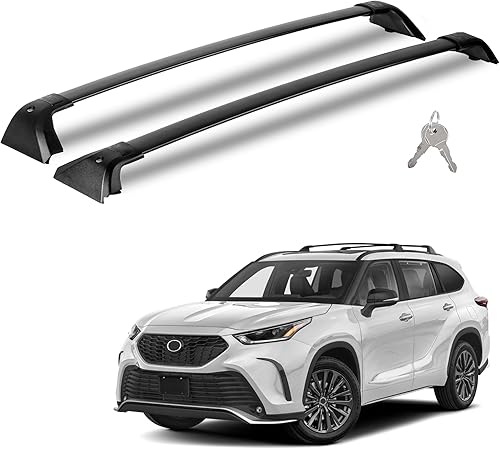
FLYCLE 260Lbs Roof Rack Crossbars are built with daily hauling in mind, especially for drivers running a Toyota Highlander 2020–2025 with factory side rails. The aluminum crossbar setup feels solid once mounted, holding roof boxes, cargo baskets, kayaks, bikes, and even smaller rooftop carriers without constant rattling. The anti-theft locking system adds a layer of peace of mind for long highway drives or parking overnight, while the matte black finish blends well with OEM roof rails and trim.
These roof rack cross bars are rated for up to 260 lbs dynamic load, which suits camping gear, skis, snowboards, and luggage bags pretty well. Installation stays straightforward for most users, no drilling needed, and the aerodynamic profile helps cut down some wind noise compared to boxy steel bars. For Highlander owners needing extra cargo space without moving to a full roof platform, this setup lands in a practical middle ground.
Pros
- 260 lbs load capacity supports roof boxes, kayak racks, and cargo carriers
- Compatible with Toyota Highlander models from 2020 to 2025
- Lockable anti-theft design adds security during travel
- Aluminum construction resists rust and corrosion
- Low-profile shape helps reduce wind drag and whistling
Cons
- Only fits vehicles with factory-installed side rails
- Not intended for extremely heavy rooftop tents
- Limited adjustability compared to premium modular crossbar systems
05. Richeer 220LBS Lockable Roof Rack Cross Bars
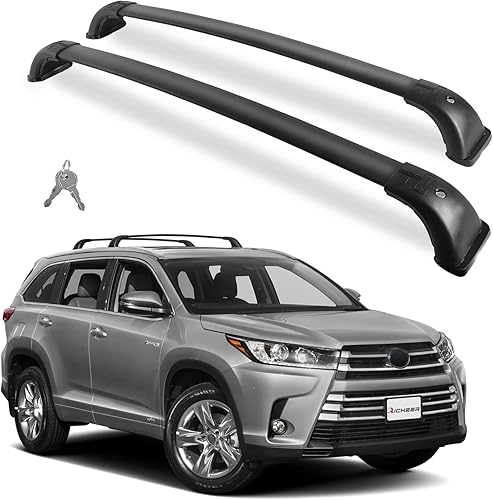
The Richeer 220LBS Lockable Roof Rack Cross Bars are built for drivers who actually use their Toyota Highlander for hauling real gear, not just looks. Designed to fit select Highlander models, these cross bars clamp securely to factory side rails and sit low to reduce wind noise at highway speeds. The aluminum construction keeps weight down while still supporting rooftop cargo boxes, bike racks, kayaks, skis, snowboards, and rooftop carriers commonly used for road trips and outdoor hauling.
What stands out is the built-in locking system, which helps keep roof-mounted cargo a little less tempting when parked. Installation is straightforward with included hardware, no drilling needed, and the bars feel solid once torqued down. For daily use, weekend travel, or long-distance driving, these cross bars do the job without trying to be fancy or over-engineered.
Pros
- Rated up to 220 lbs load capacity for cargo boxes, bikes, kayaks, and luggage
- Lockable design adds basic theft deterrence for roof rack accessories
- Lightweight aluminum cross bars resist rust and corrosion
- Compatible with factory side rails on supported Toyota Highlander years
- Low-profile shape helps limit excess wind noise
Cons
- Vehicle-specific fit means not universal across all SUVs
- Locks are functional but not heavy-duty security hardware
- Instructions could be clearer for first-time roof rack installs
How to Choose The Best Cross Bars for Toyota Highlander
Buying cross bars for a Toyota Highlander sounds simple until you actually start looking. Suddenly you’re buried in load ratings, clamp styles, roof types, wind noise complaints, and strangers online arguing like it’s politics. You just wanted to carry a kayak or a cargo box, not question your life choices. And yet here we are.
The Highlander itself is calm, sensible, family-friendly. The cross bars situation is… not calm. It’s fiddly, and full of small decisions that somehow matter more than they should.
First, know what kind of roof you’re even dealing with
Not all Toyota Highlander roof setups are built the same, and this is where people mess up early. Some trims come with raised side rails, others have flush rails, and a few base models come with a naked roof that looks innocent but complicates everything.
Raised rails are the easiest. You clamp cross bars between them and move on with your life. Flush rails need vehicle-specific mounting points, meaning universal bars often don’t fit right no matter how hard the seller insists they do. Naked roofs require fixed mounting kits or door frame clamps, which works but feels slightly aggressive, like clamping a ladder to a porcelain sink.
Highlander models from around 2020 onward mostly use flush rails. Earlier generations leaned more toward raised rails. If you don’t check this first, you’ll buy the wrong bars and spend an afternoon arguing with aluminum.
Load rating is where optimism goes to die
Cross bars always have two numbers that matter. Dynamic load rating and static load rating. Dynamic is while driving. Static is when parked. People confuse these constantly, including me once, and it ended poorly.
Most Highlander cross bars are rated around 150 to 165 lbs dynamic load. That means while driving, not at camp, not while sleeping in a rooftop tent. Toyota’s own roof load limit for many Highlander years sits around 165 lbs total, including the bars themselves. That’s not generous.
Static loads can be much higher, sometimes 500 to 700 lbs, which is why rooftop tents technically work. But driving with that weight? No. Physics will have a meeting with your suspension and it won’t be friendly.
Also, wind changes things. A cargo box at highway speed doesn’t weigh the same as it does in your garage. Air pressure adds force. This isn’t theoretical. Studies on roof-mounted loads show drag can increase effective load stress by 20 to 30 percent at 70 mph. That’s real stress, not brochure math.
Bar shape
Round bars are cheap and strong, but loud. Square bars whistle like they’re haunted. Aero bars are quieter, flatter, and cost more, but your ears will thank you.
On a Toyota Highlander, aero bars usually make sense because the roofline already sits high. Adding noisy bars on top just amplifies wind chaos. People say “you’ll get used to the noise.” No you won’t. You’ll just turn the radio louder and pretend it’s fine.
Aero bars reduce wind noise by roughly 30 to 40 percent compared to round or square profiles. That’s not brand hype, that’s airflow behaving slightly better.
Width and overhang
Cross bars come in different lengths. Too short and you can’t fit wide cargo. Too long and they stick out like elbows in a crowded elevator. Overhang looks tough until you smack your head loading a bike. Ask me how I know.
Highlanders usually work best with bars that extend just a bit past the rails. Enough to mount accessories, not enough to become a forehead hazard. Some brands sell vehicle-specific widths, others make you cut bars down. Cutting aluminum in your driveway feels empowering until you cut it wrong.
Factory bars vs aftermarket bars, the quiet debate
Factory Toyota Highlander cross bars look clean. They match the car. They install fast. But they’re often lower-rated and less flexible for accessories. Aftermarket bars usually hold more weight and accept more mounts, but can look bulky.
OEM bars often cap around 120 to 150 lbs dynamic, while aftermarket options push closer to the vehicle limit. If you’re hauling bikes and skis, factory bars are fine. If you’re hauling a loaded cargo box plus a kayak because overpacking is your personality, aftermarket starts making more sense.
Also, factory bars are rarely cheap. You’re paying for fit and branding. That’s not a crime, just a fact.
Installation difficulty is emotionally underrated
Some cross bars install in 15 minutes. Others require torque keys, alignment measurements, and patience you didn’t know you lacked. Flush rail systems especially need precision. One millimeter off and the bar sits crooked, which you won’t notice until you’re driving and something feels wrong but you can’t explain why.
Most cross bars should be torqued between 35 and 55 inch-pounds, depending on design. Over-tighten and you risk rail damage. Under-tighten and the bars shift under load. Neither is fun.
Accessories decide everything later
Think ahead. Bike racks. Kayak saddles. Cargo boxes. Ski carriers. Not all bars accept all mounts. Some use T-slots. Some clamp-only systems reject certain accessories.
Highlanders are popular road trip vehicles, which means cargo boxes are common. Most cargo boxes require cross bars spaced between 24 and 36 inches. If your bars don’t allow that spacing, congratulations, you bought expensive aluminum decorations.
Weather, corrosion, and the long game
If you live where salt exists, whether from roads or oceans, coating quality matters. Cheap bars pit and corrode. Stainless hardware helps. Powder coating helps. Bare aluminum oxidizes in ugly ways.
A study on automotive roof accessories showed untreated aluminum components lost structural integrity faster in coastal environments by up to 15 percent over five years. That’s not immediate failure, but it adds up quietly.
Conclusion
Choosing cross bars for a Toyota Highlander is less about finding “the best” and more about not choosing the wrong ones. You want bars that fit your roof type, respect the vehicle’s weight limits, stay quiet enough that you don’t resent them, and work with the stuff you actually carry. Not the stuff you imagine carrying one day.
People overbuy. People underthink. Both regret it. The right bars feel boring once installed, and boring is good. No rattling, no noise, no drama. Just gear where it’s supposed to be.
And if you bonk your head on an overhanging bar at least once, congratulations, you’re officially a roof rack owner now.
